Camel Sitting in Desert ITH Snaptab
A Desert Silhouette That Actually Stitches Clean
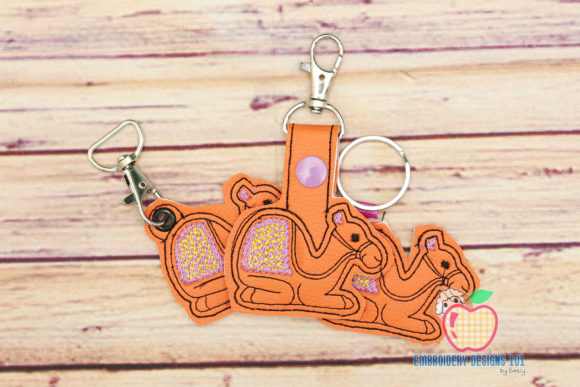
First impression? Calm, intentional, and quietly confident. The Camel Sitting in Desert ITH Snaptab doesn’t shout — it settles. That low-slung camel posture, the gentle curve of its hump against a sparse horizon line, the subtle dune texture implied through stitch direction rather than clutter: it’s a design that understands negative space. As someone who’s stitched hundreds of wild animals — from roaring lions to hyper-detailed foxes — this one stands out for its restraint. It feels like a hand-drawn sketch translated faithfully into stitch, not an over-digitized vector. That matters when you’re building trust with customers who value handmade authenticity.
Where This Design Earns Its Keep (Real Projects, Real Results)
Last week, I used the Camel Sitting in Desert ITH Snaptab on a batch of organic cotton tote bags for a small boutique launch. We paired it with a minimalist font for “Sahara Supply Co.” — and it worked because the design didn’t compete. It anchored the composition without overwhelming. That same calm energy translates across real use cases:
- Custom apparel: On heavyweight sweatshirts, the satin-stitched camel outline held crisp definition, especially around the ear and tail tip — no fraying or thread pull.
- Personalized gifts: Stitched onto a linen baby blanket (with soft tear-away stabilizer), the desert motif felt warm and gender-neutral — perfect for nursery decor without cliché.
- Etsy listings: As a digital embroidery file, it’s ideal for crafters selling key fobs or snaptabs — the three included versions (Snap Tab, Eyelet, Ribbon) let buyers choose hardware without needing separate designs.
- Boutique branding: Used as an embroidered patch on aprons for a Middle Eastern spice shop, it added subtle thematic cohesion — recognizable but never kitschy.
It’s also strong in holiday embroidery: think camel-shaped ornaments on tea towels or pillow covers for a “desert winter” theme. And yes — it works beautifully as an applique design when layered over textured fabrics like burlap or canvas, thanks to its clean outer edge and moderate stitch density.
Where to Pause Before Pressing Start
This isn’t a “stitch-and-forget” design — and that’s a good thing. Its quiet strength means details matter more. Here’s where attention pays off:
- Thin or stretchy fabric: On lightweight rayon tees or baby knits, use cutaway + tear-away combo stabilizer. The fill stitch in the camel’s body needs support to avoid puckering.
- Dark fabric: Test thread colors first. Some desert-toned threads disappear on charcoal or navy. A warm taupe or burnt sienna often reads clearer than true beige.
- Curved surfaces: Avoid placing it near the crown seam of caps — the shape distorts slightly there. It shines best on flat or gently contoured areas like tote bag fronts or pillow centers.
- Frequent washing: While the stitch layout is durable, avoid dense fill areas on items meant for heavy laundering (like kitchen towels) unless you’ve tested shrinkage and thread wear.
What It Adds — and What It Doesn’t Pretend To Be
The Camel Sitting in Desert ITH Snaptab elevates perceived value without demanding premium pricing. Customers notice the balance — how the camel sits *in* the space, not on top of it. That visual breathing room signals intentionality, which builds trust faster than any tagline. For Etsy sellers, it’s a smart differentiator in the crowded Wild Animals category: it’s recognizable as a camel, but distinct from cartoonish or overly literal interpretations. As a commercial embroidery project asset, it scales well — looks professional on mockups, prints cleanly in black-and-white product photos, and maintains clarity even at 2x2 inch size.
It won’t replace a complex wildlife portrait for a gallery wall piece. Nor is it built for tiny lettering or intricate floral borders. But as a standalone machine embroidery design for functional, tactile products — totes, patches, key fobs, baby items — it delivers quiet confidence. That’s rare.
Designer Notes You’ll Actually Use
Before stitching your first Camel Sitting in Desert ITH Snaptab on client work or inventory:
- Test on scrap fabric matching your final substrate — especially if using textured or dark fabric.
- Review stitch density visually in your embroidery software. Look for tight clusters near the camel’s eye or hoof — adjust underlay if needed.
- Confirm hoop size: it’s labeled 4x4 hoop friendly, but double-check your machine’s actual usable area — some models lose 0.1–0.2 inches at the edges.
- Inspect small details at 200% zoom: does the dune line read as texture or noise? Does the snap tab loop align cleanly with the base?
- Run a black-and-white printable mockup — this design relies on contrast and shape, not color, so grayscale testing reveals clarity issues fast.
- Verify licensing terms before selling finished products or bundling the embroidery file digitally. The listing mentions it’s for In The Hoop use — confirm commercial rights if scaling for your craft business.
And one last note: this design breathes best when paired with simplicity elsewhere. Let the camel sit. Don’t crowd it with text, borders, or competing motifs. In embroidery — like in the desert — space is part of the story.